

 saasmaster
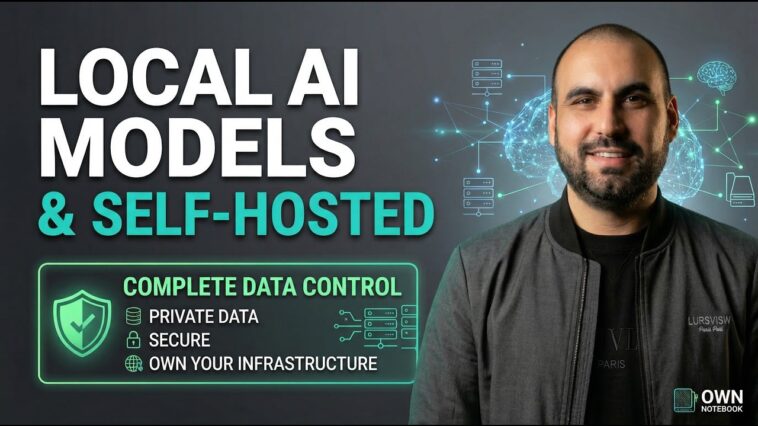
Make an SEO blog post on my WordPress site about a video I made on YouTube. You can try to expand more if you know more about the subject or brand. Use this YouTube description and transcript I am going to provide for the blog post. Description: Grab this Web Hosting Plan: https://saasmaster.link/hostingervps
Coupon: SAASMASTER
Open Notebook: https://www.open-notebook.ai/
YAML Code: https://files.veememedia.com/f/17relp
Open Notebok setup video: https://youtu.be/X9YvVu_vrCI
If you want a private, self-hosted alternative to NotebookLM, this step-by-step tutorial shows you how to run Open Notebook (OpenNote/OpenNotebook) on a VPS using Docker. You’ll learn how to add API keys securely, enable models (chat, embeddings, TTS/STT), organize sources and notes, and chat with your data inside notebook-specific contexts—just like NotebookLM, but self-hosted and private.
We’ll walk through:
– VPS + Docker basics (works with Hostinger or any VPS)
– Adding API keys via Docker config (no keys in the UI)
– Selecting and enabling chat, embeddings, TTS, and STT models
– Creating notebooks with isolated knowledge bases (privacy by design)
– Using sources (URLs, files, text), notes, and global Ask/Research
– Optional features like vector search and podcast generation
Perfect for researchers, creators, founders, and engineers who need privacy, control, and lower costs than SaaS.
Chapters
00:00 Intro: Free, private NotebookLM alternative (Open Notebook on Docker/VPS)
00:36 VPS overview and why Docker for self-hosted AI
01:57 Add API keys via Docker env/config (OpenAI + other providers)
03:00 Enable models: chat, embeddings, TTS/STT, default selections
03:52 Create notebooks: isolated research spaces and privacy benefits
04:53 Add sources: URLs, file uploads, and plain text
05:20 Notes: capture insights and updates per notebook
05:49 Chat with your notebook data (model selection and usage)
06:10 Global Ask & Research: search all sources and notes
06:30 Vector search options: embeddings and knowledge base queries
06:43 Create features (e.g., podcast) based on enabled models
07:10 Wrap-up: why self-hosted beats SaaS for privacy and cost
PRO TIPS
– Security first: Put API keys into Docker environment variables or Docker secrets—not in the UI. Use a .env file managed outside your repo and revoke/regenerate keys regularly.
– HTTPS + reverse proxy: Front your container with Nginx/Traefik and enable HTTPS (Let’s Encrypt). Lock down ports and use a firewall (UFW) on your VPS.
– Choose sensible models: Use a fast, low-cost model for exploration and a higher-quality model for final outputs. Consider provider fallback if rate-limited.
– Embeddings matter: Pick high-quality embedding models for better search/RAG. Test a few on your content (e.g., multilingual vs. English-only).
– Vector DB optional but powerful: If supported, plug in an external vector database (like Qdrant, Weaviate, or pgvector) for scalability and speed.
Top Links: https://saasmaster.net/links
▬▬▬▬▬▬▬▬▬▬▬▬▬▬▬▬▬▬▬▬▬▬▬▬▬▬▬ Transcripti:


How is the output compared to NotebookLM? Is there no hallucinations like NotebookLM which is very good at?
that's useful. We're using it at ActorDo