AI Tools
What Claude Fable 5 Means for Developers and Vibe Coders
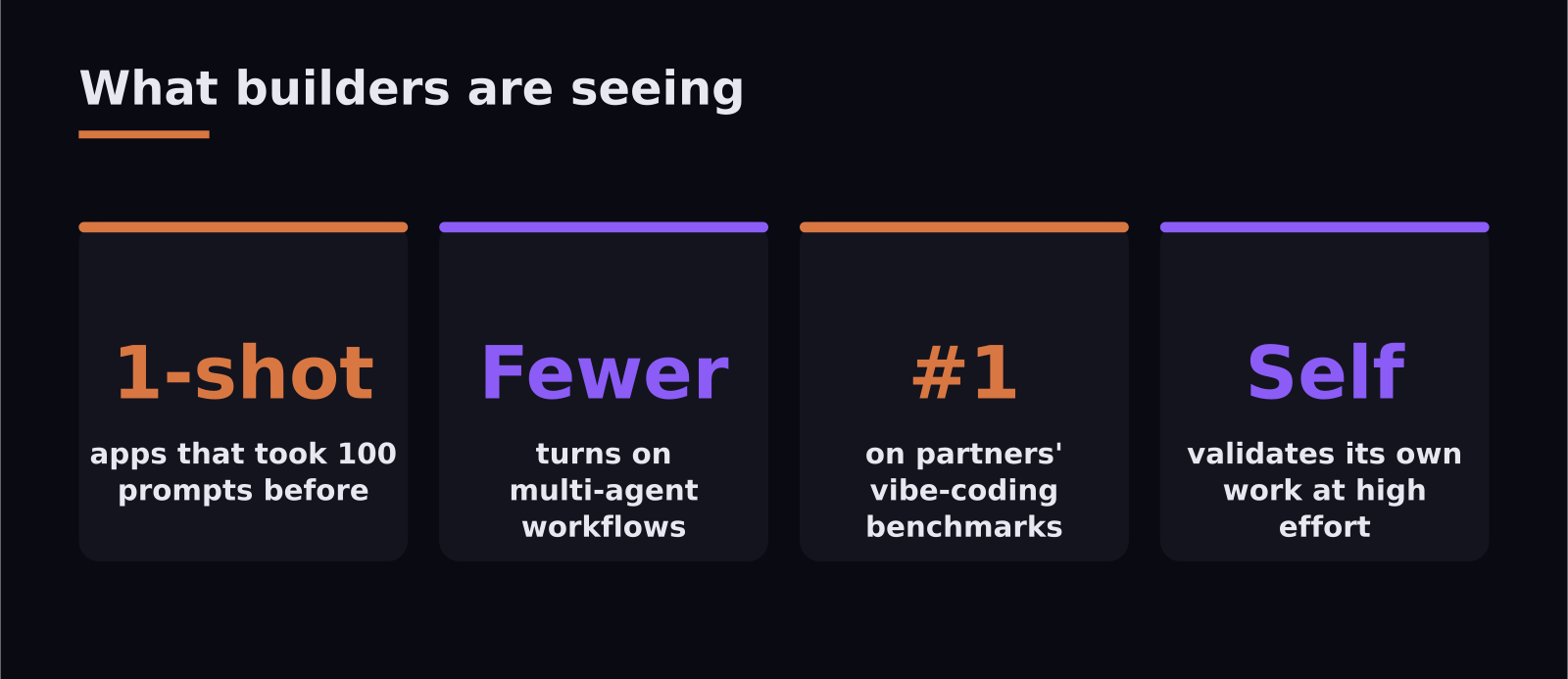
If you build software — whether you write every line yourself or "vibe code" by describing what you want — Claude Fable 5 changes the ceiling on what one person can ship. Early partners say it one-shots apps that took a hundred prompts a year ago, tops their vibe-coding benchmarks, and handles complex multi-agent workflows in fewer turns. For builders, the headline is simple: you can hand off bigger, fuzzier jobs and get working software back. Here's what actually changes.
I make videos explaining these tools, so let me translate the launch hype into what it means for how you'll build.
Key takeaways
- Fable 5 tops partners' coding and "vibe-coding" benchmarks and handles long, complex builds in fewer turns.
- One partner said apps that took a hundred prompts a year ago now get "one-shotted" — built from a single well-formed request.
- It "understands what builders mean, not just what they type," reducing the back-and-forth of prototyping.
- At high effort it reflects on and validates its own work, which is what makes hands-off building viable.
- It runs in tools developers already use, including Claude Code, for multi-agent workflows.
For developers: bigger handoffs, fewer turns
The recurring theme from early testers is autonomy on long tasks. GitHub's product chief described Fable 5 taking on "complex, long-horizon coding tasks with a level of autonomy and reliability that exceeded previous benchmarks." A separate partner noted it "delivers more capable engineering in fewer turns than prior models — handling the complex multi-agent workflows our employees run daily in Claude Code."
In practice that means the unit of work you delegate gets bigger. Instead of feeding the model one small, tightly-scoped task and reviewing each step, you can assign a whole feature, a refactor, or a migration and check the result. The model also self-corrects: at high effort, it reflects on and validates its own work, catching mistakes before you do. That self-validation is the quiet feature that makes real delegation possible — an agent you have to babysit isn't saving you much.
For vibe coders: from a hundred prompts to one
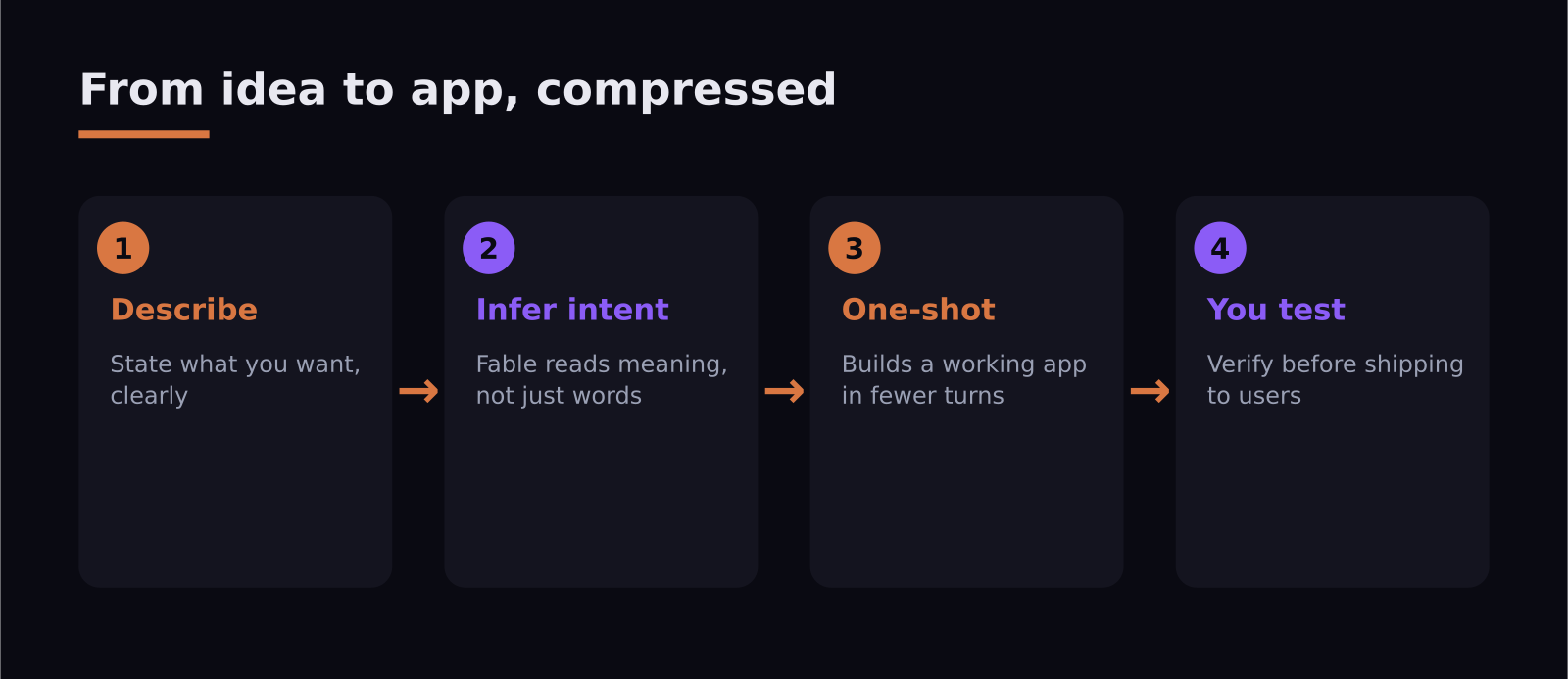
"Vibe coding" — building software by describing it in plain language rather than writing code — has been powerful but fiddly. You'd describe what you want, get something close, then nudge it through dozens or hundreds of follow-up prompts to get it right. Fable 5 compresses that loop. One platform's CTO put it bluntly: "Apps that took a hundred prompts a year ago, it now one-shots," adding that it "understands what builders mean, not just what they type." Another, whose product runs an end-to-end vibe-coding benchmark, called Fable 5 the highest-performing model they've tested, "nearly saturating our base use cases and building apps in less time with fewer tokens."
The practical effect for non-developers is fewer rounds of frustration. When the model infers your intent more accurately, you spend less time rephrasing and more time actually using what you built. The gap between "I have an idea" and "I have a working app" gets shorter.
What this doesn't change
A more capable model raises the ceiling; it doesn't remove the need for judgment. You still have to describe what you want clearly — the better your spec, the better the result, even with a model that reads intent well. You still need to test what comes out, especially for anything handling real users or data; a confident model that's subtly wrong is still wrong. And the economics matter: Fable 5 is premium-priced at $10/$50 per million tokens, so for routine building, cheaper models still make sense, and many builders will reserve Fable for the moments they hit a wall.
That last point came up directly in the launch: one partner said it's "the model we reach for to get them past it quickly" when a customer really hits a wall. That's a healthy way to think about it — your everyday driver can be cheaper, with Fable as the heavy hitter you call in for the hard parts.
The bottom line for builders
Fable 5 widens what a single builder can accomplish. Developers can delegate larger, messier work and trust the model to validate itself. Vibe coders get closer to one-shotting real apps from a clear description. Neither group gets to skip thinking, specifying, or testing — but the tedious middle, the hundred-prompt grind and the line-by-line review, shrinks. That's the kind of change that lets small teams and solo builders ship things that used to require a crew.
Frequently asked questions
Is Claude Fable 5 good for vibe coding?
Yes — partners report it tops their vibe-coding benchmarks, builds apps in fewer tokens, and "one-shots" apps that previously took a hundred prompts, because it infers builder intent more accurately.
Can I use Fable 5 in Claude Code?
Yes. Partners specifically cited Fable 5 handling complex multi-agent workflows in Claude Code with fewer turns than prior models. It's also available via the Claude API as claude-fable-5.
Should I use Fable 5 for all my building?
Not necessarily. It's premium-priced, so many builders use a cheaper model for routine work and reach for Fable 5 when they hit a genuinely hard problem that needs its extra capability.
SaaS Master
Creator behind SaaS Master — tutorials, walkthroughs, reviews, and explainers that help SaaS, AI, and WordPress products get understood and chosen. Writing here about the tools, trends, and tactics that actually move the needle. Work with me →
Want your product explained this clearly — in video?
Tutorials, walkthroughs, reviews, and shorts for SaaS, AI, and WordPress products.
Work With SaaS Master