AI Agents Are the New Employees: How Small Software Teams Run on Autopilot in 2026
In short
AI agents have gone from demo to digital coworker. Here's how small SaaS teams use agentic AI for support, sales, and admin in 2026 — and where humans still need to hold the keys.
Two years ago, 'AI for business' meant a chatbot that answered half your questions and apologized for the other half. In 2026, the conversation has completely changed. The market stopped talking about copilots and started talking about agents — software that doesn't just answer, but acts: it qualifies the lead, books the call, updates the CRM, drafts the follow-up, and logs everything it did.
Industry analysts expect roughly 80% of enterprise applications to embed agents by the end of 2026. But the more interesting story is happening below the enterprise: solo founders and five-person SaaS teams are running operations that used to require departments.
What an AI agent actually does for a small software business
Strip away the buzzwords and an agent is a loop: it reads a goal, checks the tools it's allowed to use, takes an action, looks at the result, and decides what to do next. That loop, pointed at the right job, replaces a surprising amount of manual work.
The jobs where agents are already earning their keep in small SaaS companies:
- Support triage — reading incoming tickets, answering the documented ones, routing the weird ones to a human with full context attached
- Lead qualification — researching signups, scoring them against your ideal customer profile, and drafting the personalized first touch
- Internal reporting — pulling numbers from Stripe, your database, and analytics into a Monday morning summary nobody had to assemble
- Onboarding nudges — watching where trial users get stuck and triggering the right tutorial video or email at the right moment
The 2026 shift: from more tools to one orchestrated system
The mistake of 2024–2025 was stacking AI tools — one for writing, one for support, one for research — and ending up with a more expensive pile of apps. The pattern that's winning in 2026 is orchestration: a control layer that connects your tools, agents, rules, and logs so the business runs as one system.
Platforms like HighLevel's Agent Studio, open-source options you can self-host, and workflow builders with native AI steps have made this accessible without writing code. You describe the workflow in plain language; the system builds the automation; you review it before it goes live.
Where humans still hold the keys
The teams getting burned are the ones that gave agents unsupervised access to money, contracts, or customer relationships. The teams winning set boundaries first: agents draft, humans approve. Agents recommend the refund, a person clicks the button. Every action gets logged, and there's always a fallback when the agent isn't confident.
That's the real skill of 2026 — not prompting, but governance. Decide what your agents may touch, give them clean data and clear rules, and audit what they did. Do that, and a three-person team genuinely operates like a fifteen-person one.
And if your product is the agent platform — the challenge is no longer building it, it's explaining it. Clear demo videos of agents doing real work convert better than any feature list, because seeing an agent complete a workflow is the moment buyers finally get it.
Was this article helpful?
Jorge Aguilar
Founder & Creator, SaaS Master
Producing SaaS and AI product videos since 2019 — 800+ videos for 200+ brands, covering tutorials, demos, walkthroughs, and explainers. Writing here about the tools, trends, and tactics that actually move the needle. LinkedIn · About · Work with me
Need to show users how an automation workflow works in practice?
Client-owned videos that make your product easy to understand — demos, walkthroughs, onboarding, and explainers.
Explore product walkthrough video productionRelated guides
More Automation & No-Code →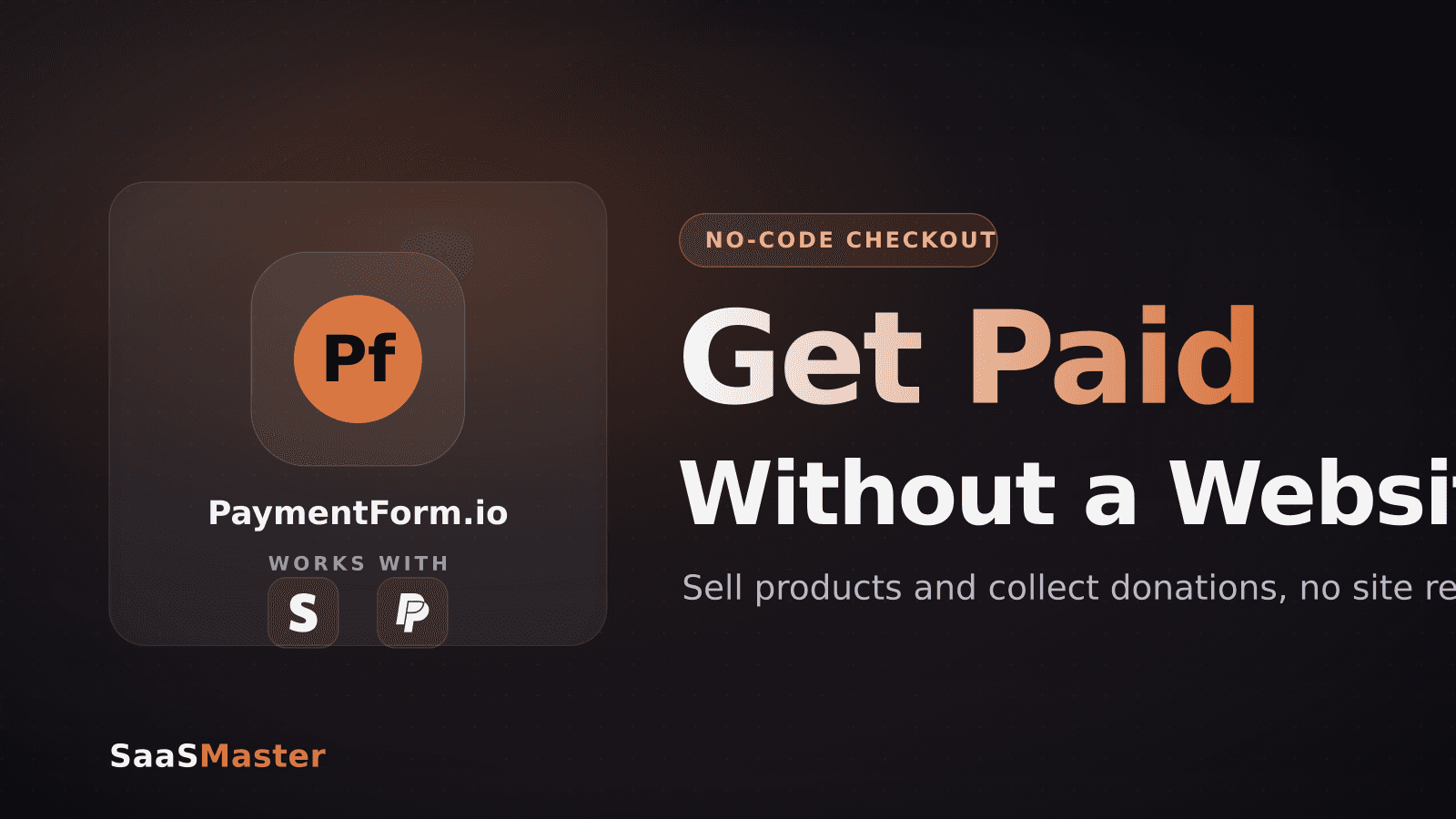
How to Collect Donations and Sell Products Online Without a Website
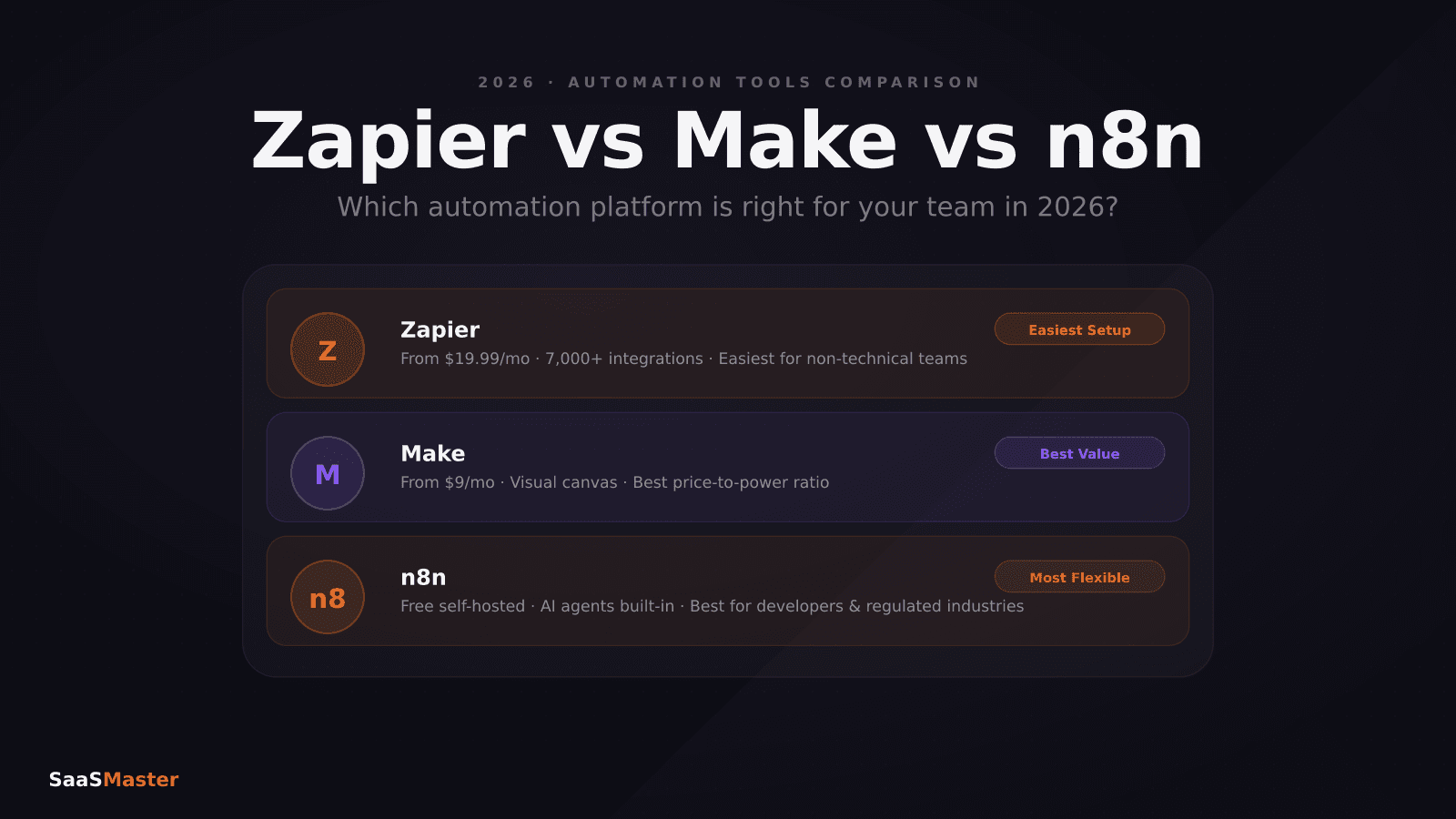
Zapier vs Make vs n8n in 2026: Which Automation Tool Saves You the Most?
n8n AI Agents in 2026: The Complete Guide to Building AI Workflows