AI Tools
Claude Sonnet 5 vs Kimi K2.6: Closed vs Open-Weight AI for Coding in 2026
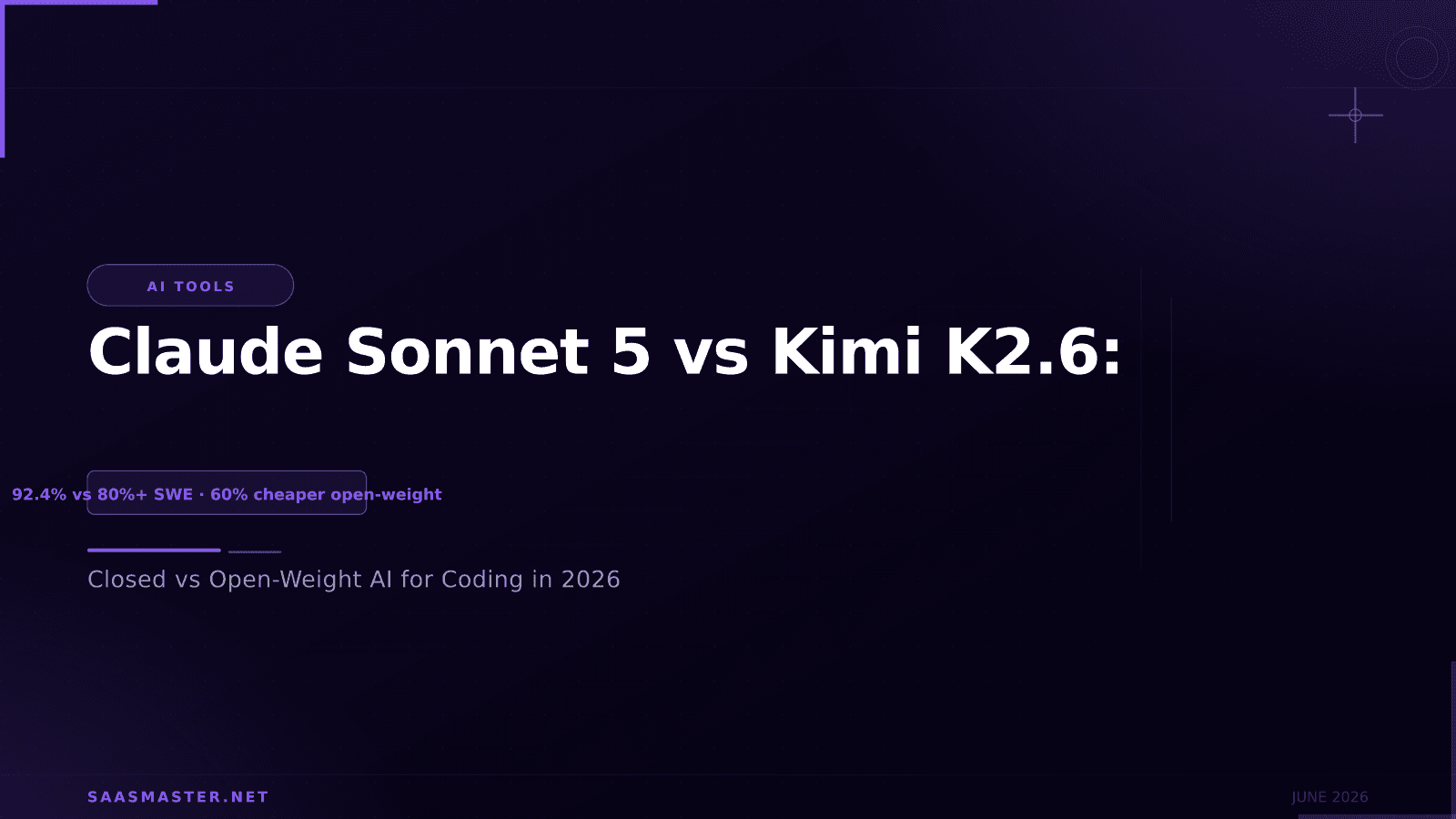
Claude Sonnet 5 and Kimi K2.6 are both strong performers on coding benchmarks in 2026, but they come from entirely different places. Sonnet 5 is Anthropic's new default frontier model at $2 intro pricing. Kimi K2.6 from Moonshot AI is an open-weight model that scored above 80% on SWE-bench Verified and costs under $0.60 per million input tokens. For SaaS builders choosing between them, the question is not just capability. It is how much you value openness, cost, and Anthropic's agentic infrastructure.
Key takeaways
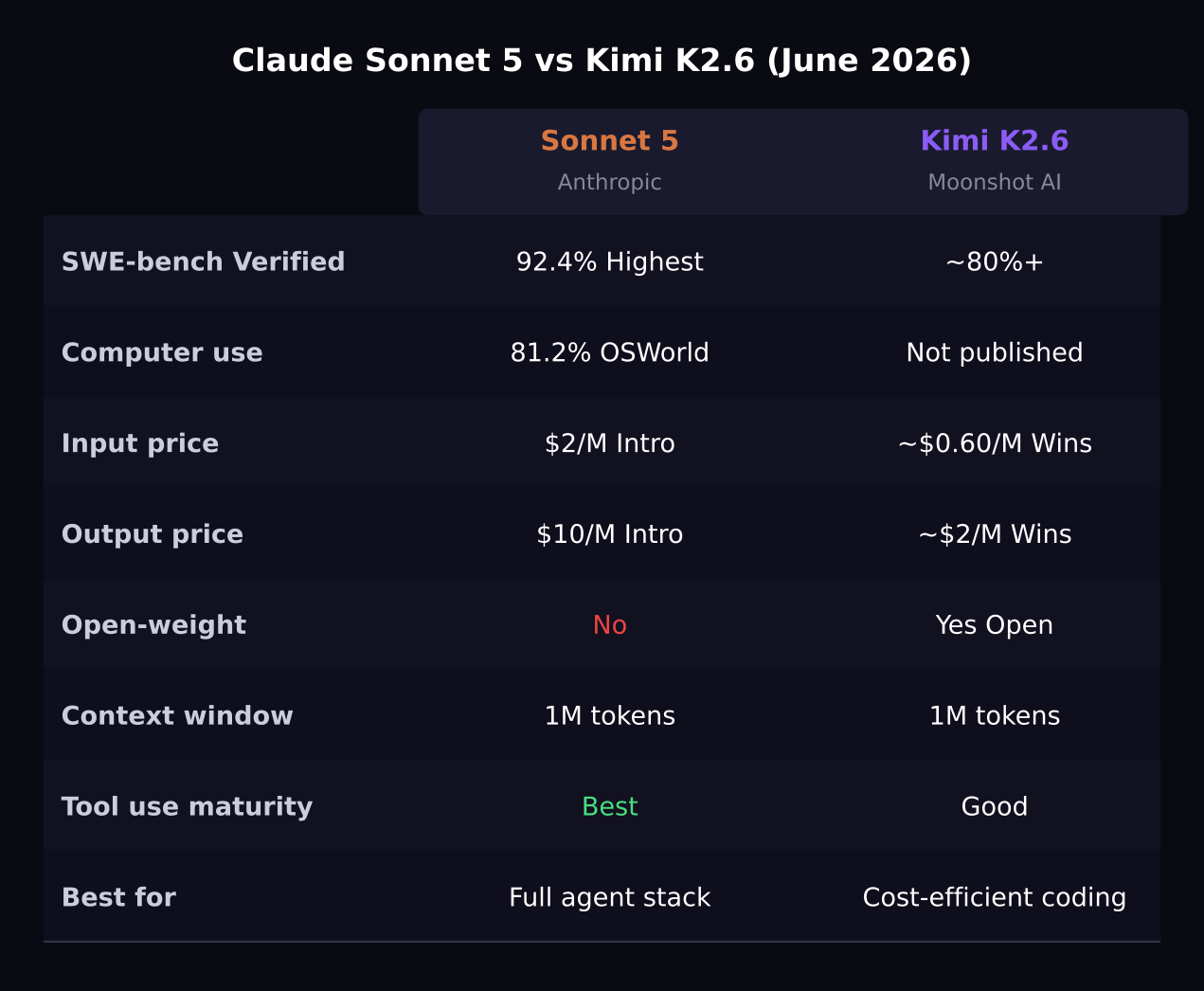
- Claude Sonnet 5 scores 92.4% on SWE-bench Verified. Kimi K2.6 scores above 80% on the same benchmark.
- Kimi K2.6 costs approximately $0.60 per million input tokens and under $2 per million output tokens. Sonnet 5 intro is $2/$10 through August 31.
- Kimi K2.6 is open-weight and self-hostable. Sonnet 5 is closed and API-only.
- Sonnet 5 has a more mature agentic stack including computer use at 81.2% OSWorld.
- For budget-constrained SaaS teams that can tolerate a smaller benchmark gap, Kimi K2.6 is one of the most cost-effective options in 2026.
What makes Kimi K2.6 notable
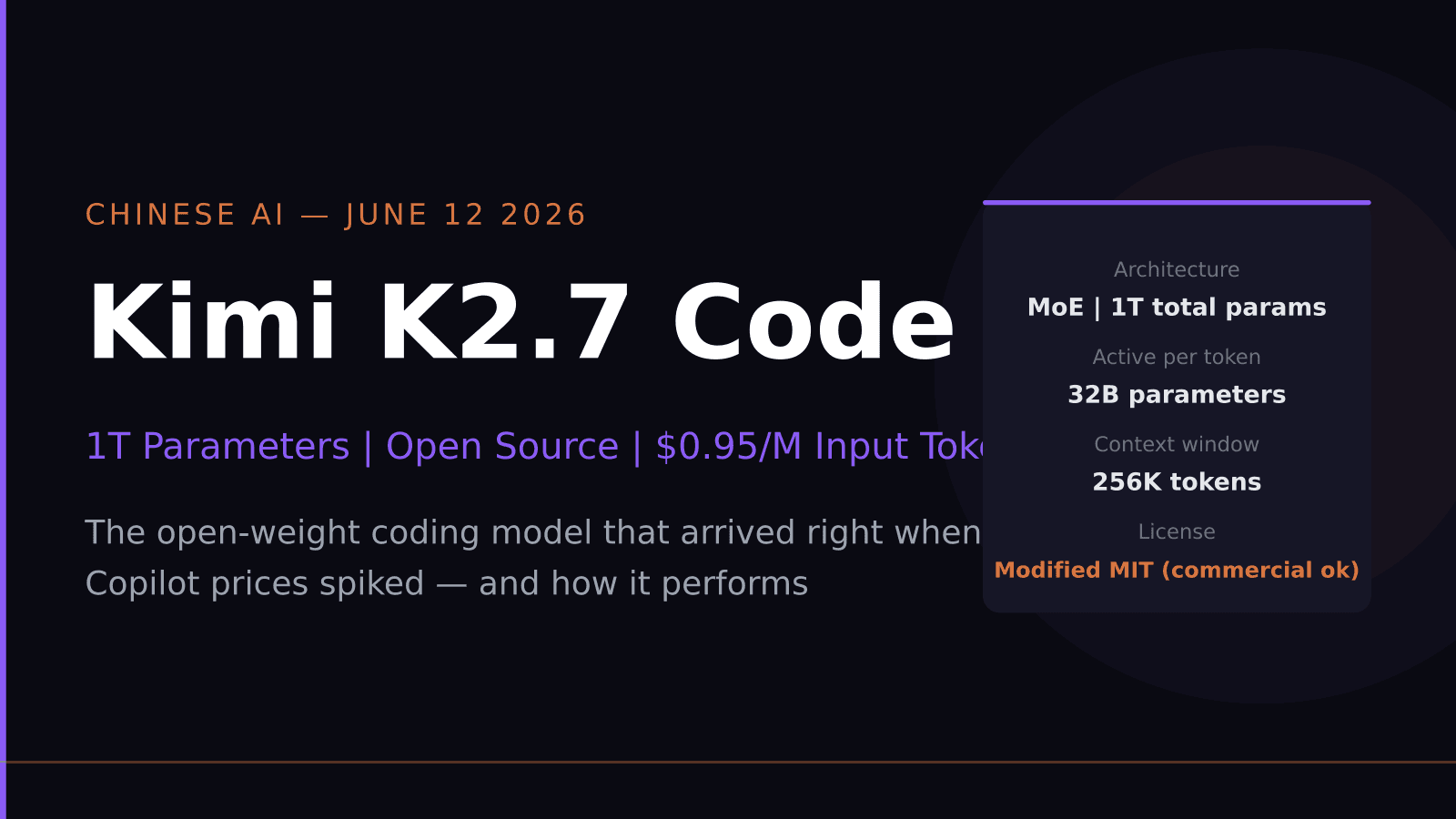
Kimi K2.6 from Moonshot AI gained attention in the first half of 2026 by scoring above 80% on SWE-bench Verified, a benchmark that was considered Opus-tier performance just six months earlier. Combined with its open-weight status and pricing under $1 per million input tokens, it became a genuine option for cost-sensitive SaaS builders.
The model supports a 1 million token context window and handles coding, reasoning, and knowledge tasks competently. Its agent capabilities are improving but trail Sonnet 5 on the most demanding autonomous workflows.
The 12-point benchmark gap
Sonnet 5's 92.4% versus Kimi K2.6's 80%+ on SWE-bench Verified is a 12-plus point gap. That gap is meaningful in practice for complex, multi-step coding tasks where accuracy compounds across steps. An agent that gets 80% of steps right on a 10-step task succeeds about 10% of the time. An agent that gets 92% right succeeds about 43% of the time. The benchmark difference translates directly to agent reliability at scale.
For simpler coding tasks, single-file edits, code review, or documentation, the gap is narrower in practice. Most developers would not notice the difference on routine tasks.
Pricing over a full year
At Kimi K2.6's $0.60 input and under $2 output versus Sonnet 5's standard $3 and $15 after August, the annual cost difference at 100 million output tokens per month is roughly $156,000. That is a real number for early-stage SaaS companies watching burn rate.
During Sonnet 5's intro period through August, the gap narrows: $2 input versus $0.60, $10 output versus under $2. Even at intro pricing, Kimi K2.6 is cheaper per token.
Self-hosting and data control
Kimi K2.6's open-weight release is a significant advantage for teams with data residency requirements or infrastructure cost structures that favor GPU rental over per-token pricing. You can run Kimi K2.6 on your own hardware or through third-party providers at infrastructure cost.
Sonnet 5 is available only through Anthropic's API, Amazon Bedrock, and Google Cloud Vertex. Your data goes to Anthropic's servers unless you have a contract with specific data handling terms.
My recommendation
If you are building a product where coding quality at the frontier level matters and you need Anthropic's full agentic stack including computer use, Sonnet 5 at intro pricing is the right call. If you are building a cost-sensitive product where the hardest coding edge cases are not common, Kimi K2.6 is one of the best values in open-weight AI today.
The two models are not in the same quality tier, but they are in the same conversation for teams that can trade some benchmark margin for meaningfully lower costs or open-weight flexibility.
Frequently asked questions
Is Kimi K2.6 good enough for production SaaS coding agents?
For most routine SaaS coding tasks, yes. For demanding autonomous agents that need to complete complex multi-step engineering tasks reliably, Sonnet 5's 12-point SWE-bench Verified lead is significant in practice.
How do I access Kimi K2.6?
Kimi K2.6 is available through Moonshot AI's API, major third-party providers including Together AI and DeepInfra, and as self-hosted weights for teams with GPU infrastructure.
Does Kimi K2.6 support computer use like Claude Sonnet 5?
Kimi K2.6 has tool use capabilities but does not have a published computer use benchmark equivalent to Sonnet 5's 81.2% OSWorld score. For computer control and browser automation in agent workflows, Sonnet 5 is the better-documented choice.
Was this article helpful?
SaaS Master
Creator behind SaaS Master — tutorials, walkthroughs, reviews, and explainers that help SaaS, AI, and WordPress products get understood and chosen. Writing here about the tools, trends, and tactics that actually move the needle. Work with me →
Want your product explained this clearly — in video?
Tutorials, walkthroughs, reviews, and shorts for SaaS, AI, and WordPress products.
Work With SaaS Master