HeyGen vs. Synthesia vs. Colossyan: The Best AI Avatar Video Tool for SaaS Demos in 2026
In short
HeyGen, Synthesia, and Colossyan all turn a script into a talking AI avatar. Here's the 2026 pricing and where each one actually fits a SaaS video workflow.
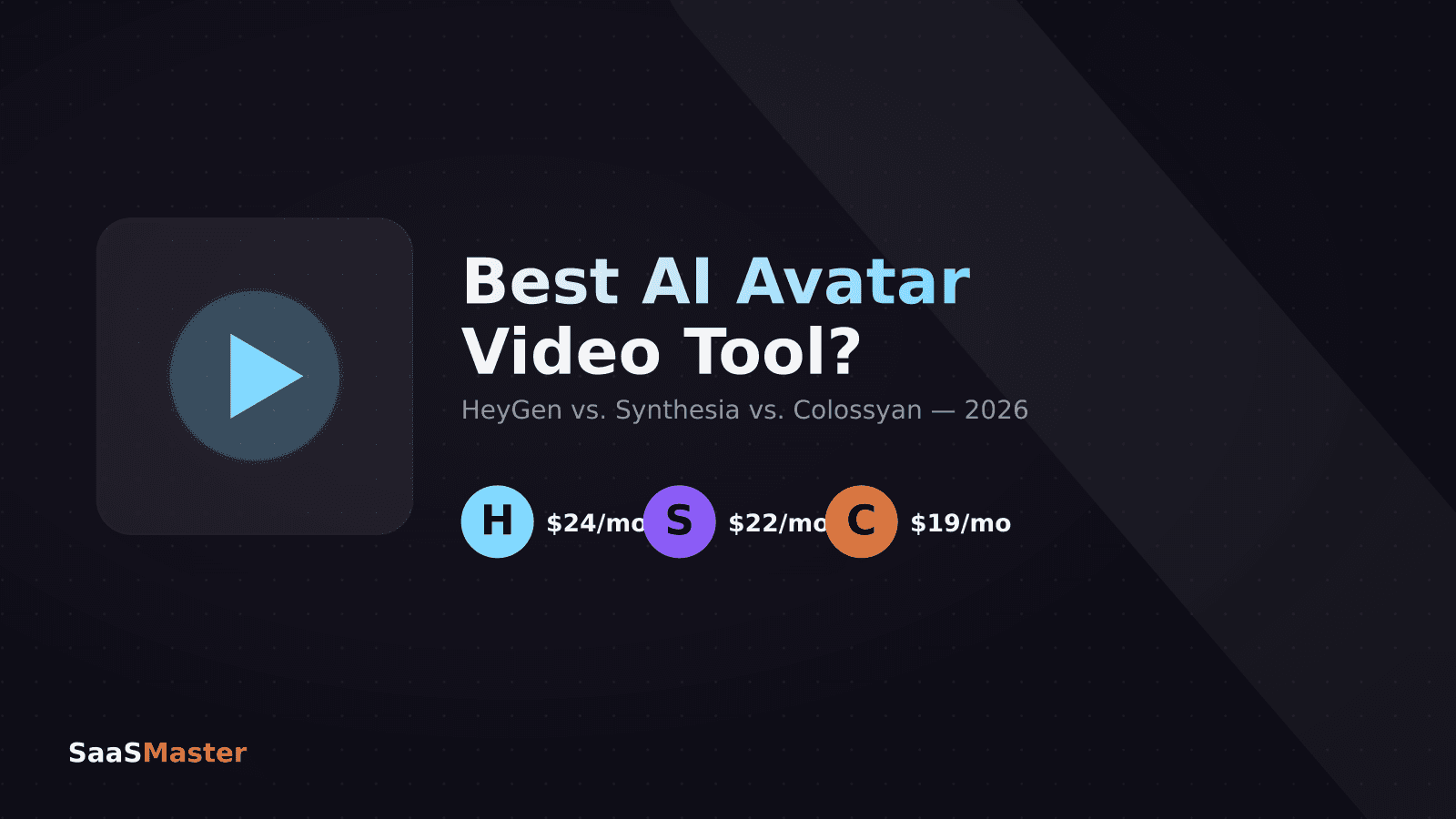
HeyGen's Creator plan runs $24 a month billed annually ($29 month-to-month) and leads on avatar naturalness and voice cloning across 175+ languages. Synthesia starts at $22 a month annually with a $29 Starter tier for custom avatars, and it's the one enterprise compliance teams trust most. Colossyan starts cheapest at $19 a month and wins specifically on training and in-video quizzes, an area neither HeyGen nor Synthesia matches natively. If you're producing customer-facing SaaS demo clips, HeyGen's breadth is the safest default; if you're building internal training content, Colossyan is the better fit.
Key takeaways
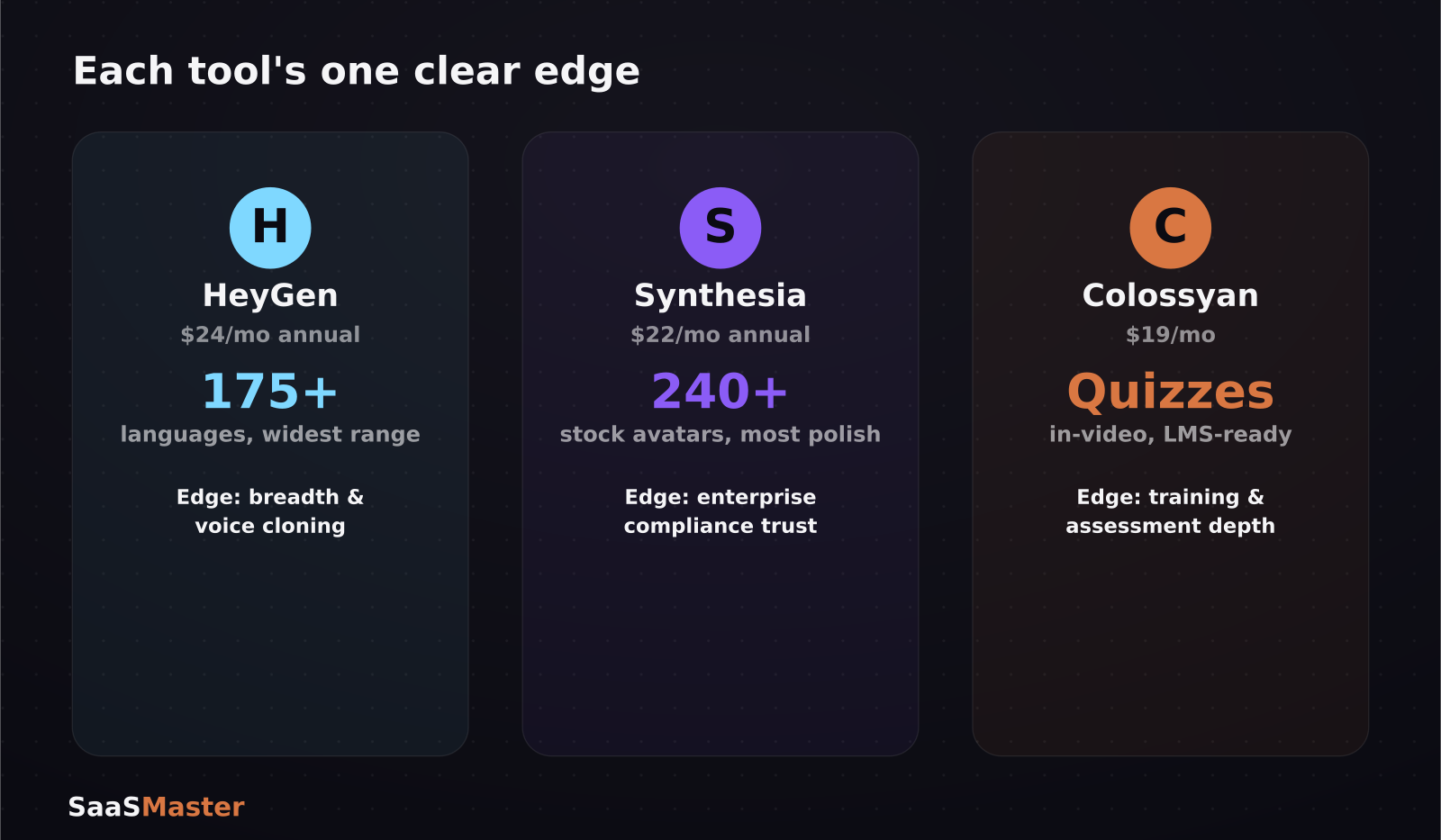
- HeyGen Creator is $24/month billed annually ($29 monthly) and offers 100+ avatars and 175+ languages — the widest avatar and language range of the three.
- Synthesia starts around $22/month annually, with a $29/month Starter tier unlocking custom avatars; it's positioned as the enterprise-trust option with 240+ stock avatars and 160+ languages.
- Colossyan is the cheapest entry point at $19/month and is the only one of the three with native in-video quizzes and knowledge checks built for workplace learning.
- HeyGen wins on avatar naturalness and voice cloning flexibility; Synthesia wins on structured editing and enterprise compliance; Colossyan wins on training depth and LMS-style features.
- Colossyan supports 70+ languages with automatic translation and voice-over generation — fewer languages than HeyGen or Synthesia, but tightly built for course-style content.
What actually is an "AI avatar" video tool?
These platforms turn a written script into a video of a presenter — either a licensed stock avatar or a cloned version of a real person — speaking your words in a chosen language, without a camera, studio, or actor. For SaaS companies, the appeal is obvious: a product update, a feature explainer, or a training module can go from script to finished video in under an hour instead of requiring a shoot day. The three leaders have converged on similar core mechanics but diverged hard on who they're actually built for.
How does the pricing actually compare?
Colossyan is the cheapest way in at $19 a month, followed by Synthesia at roughly $22 a month annually, with HeyGen close behind at $24 a month annually ($29 if you pay monthly instead). None of these entry prices are far apart, so pricing alone shouldn't be your deciding factor — what you get at each tier, especially around custom avatars and export limits, matters more than the sticker price. Business and enterprise tiers scale well beyond these numbers on all three, with HeyGen's Business plan running $149 a month for teams that need more seats and higher output volume.
Where does HeyGen actually win?
HeyGen's biggest edge is breadth: 100+ avatars and voice cloning across 175+ languages, available on every paid plan rather than gated to a top tier. That makes it the safest general-purpose choice if you're not sure yet exactly how you'll use avatar video — marketing clips, product walkthroughs, or multilingual support content can all live under one HeyGen subscription without upgrading.
Where does Synthesia actually win?
Synthesia's strength is polish and trust: a larger stock avatar library at 240+ options, 160+ supported languages, and the kind of structured editing workflow that enterprise compliance and L&D teams have standardized on for years. If your video content needs to clear a legal or brand-compliance review before it ships, Synthesia's maturity in that specific use case is hard to match.
Where does Colossyan actually win?
Colossyan's differentiator is training-specific functionality: in-video quizzes, knowledge checks, and assessments with tight LMS integration, none of which HeyGen or Synthesia offer natively. It also supports 70+ languages with automatic translation and voice-over generation — a smaller footprint than its rivals, but purpose-built for course content rather than general marketing video.
So which one should a SaaS team pick?
If you're producing customer-facing demo or explainer clips and want the widest avatar and language flexibility without upgrading tiers, start with HeyGen. If the video needs to survive a legal or brand review before publishing — think investor updates or regulated-industry product explainers — Synthesia's enterprise track record earns its price. If you're building onboarding or internal training content where you need to confirm someone actually watched and understood the material, Colossyan's quizzes are the one feature none of its competitors replicate.
How well do these tools handle localization for a global SaaS audience?
Localization is where AI avatar tools genuinely save the most time compared to traditional video production: instead of re-shooting or hiring dubbing talent per market, you re-render the same script with a different voice track. HeyGen's 175+ languages and Synthesia's 160+ give both platforms enough range to cover nearly any market a mid-size SaaS company sells into, while Colossyan's 70+ languages will cover most major markets but is worth checking against your specific target list before committing. All three handle lip-sync adjustment automatically when the language changes, though review the output before publishing — automatic lip-sync across languages with very different sentence lengths (English to Japanese, for example) is the one place these tools still occasionally show visible seams.
Does switching between these tools require rebuilding your workflow?
Not usually, since all three work from the same basic input — a script, a chosen avatar, and a voice — but the editing environment differs enough that a team accustomed to Synthesia's structured, slide-like editor will need a short ramp-up period on HeyGen's more freeform canvas, and vice versa. Colossyan's editor leans further toward course-authoring, with the quiz and assessment builder sitting alongside the video timeline rather than as a separate afterthought. If you're evaluating a switch, budget a single test project through the whole tool before committing a whole content calendar to it, since export settings, avatar customization limits, and team permission structures all vary enough to matter once you're producing weekly.
Where AI avatars fit next to real video production
AI avatars are genuinely useful for fast iteration and localization, but they're still a different tool than a produced SaaS explainer video built around your actual product UI and a real presenter's judgment about pacing and emphasis — the two approaches solve different problems rather than compete directly. We cover the broader AI video generation landscape in our comparisons of Seedance 2.5, Sora 2, and Veo 3.1 and Sora 2, Veo 3.1, and Runway Gen-4.5, which sit next to avatar tools as a related but distinct category worth understanding together.
For more on where AI video tools are heading, visit our Video Marketing hub, and if you're turning static content like PDFs or decks into something more interactive, our guide to Flipsnack's interactive flipbooks is a useful next read.
Frequently asked questions
Is HeyGen or Synthesia better for enterprise compliance video?
Synthesia is the stronger fit for enterprise compliance and legal review workflows, thanks to its larger stock avatar library, broader language coverage at the enterprise tier, and an editing structure L&D and compliance teams have relied on for longer.
Does Colossyan support as many languages as HeyGen or Synthesia?
No — Colossyan supports 70+ languages with automatic translation, compared to HeyGen's 175+ and Synthesia's 160+, but it makes up for the smaller footprint with training-specific features like in-video quizzes that neither competitor offers.
What's the cheapest way to start with AI avatar video?
Colossyan's $19/month Starter plan is the lowest entry price among the three, though HeyGen's $24/month annual Creator plan and Synthesia's roughly $22/month annual plan are close enough that feature fit should decide it, not price alone.
Can I clone my own voice or likeness in any of these tools?
Yes — all three offer some form of custom avatar or voice cloning on paid tiers, with HeyGen generally regarded as the most flexible for voice cloning specifically, while Synthesia and Colossyan both require a verification step for custom avatars to prevent misuse of someone else's likeness.
Was this article helpful?
Jorge Aguilar
Founder & Creator, SaaS Master
Producing SaaS and AI product videos since 2019 — 800+ videos for 200+ brands, covering tutorials, demos, walkthroughs, and explainers. Writing here about the tools, trends, and tactics that actually move the needle. LinkedIn · About · Work with me
Need a product demo, walkthrough, or SaaS explainer?
Client-owned videos that make your product easy to understand — demos, walkthroughs, onboarding, and explainers.
Explore SaaS video productionRelated guides
More Product Demos & Video Marketing →
SaaS Product Video Brief Template for Marketing Teams
What Does SaaS Video Production Cost?
Where SaaS Companies Should Use Product Videos: Website, Sales, Onboarding, and Ads