Claude Opus 4.8 vs GPT-5.5: Every Benchmark, Real Pricing, and Which to Use in 2026
In short
We compared Claude Opus 4.8 and GPT-5.5 across every major benchmark including coding, reasoning, and hallucination rate. Plus real pricing, context windows, and an honest recommendation.
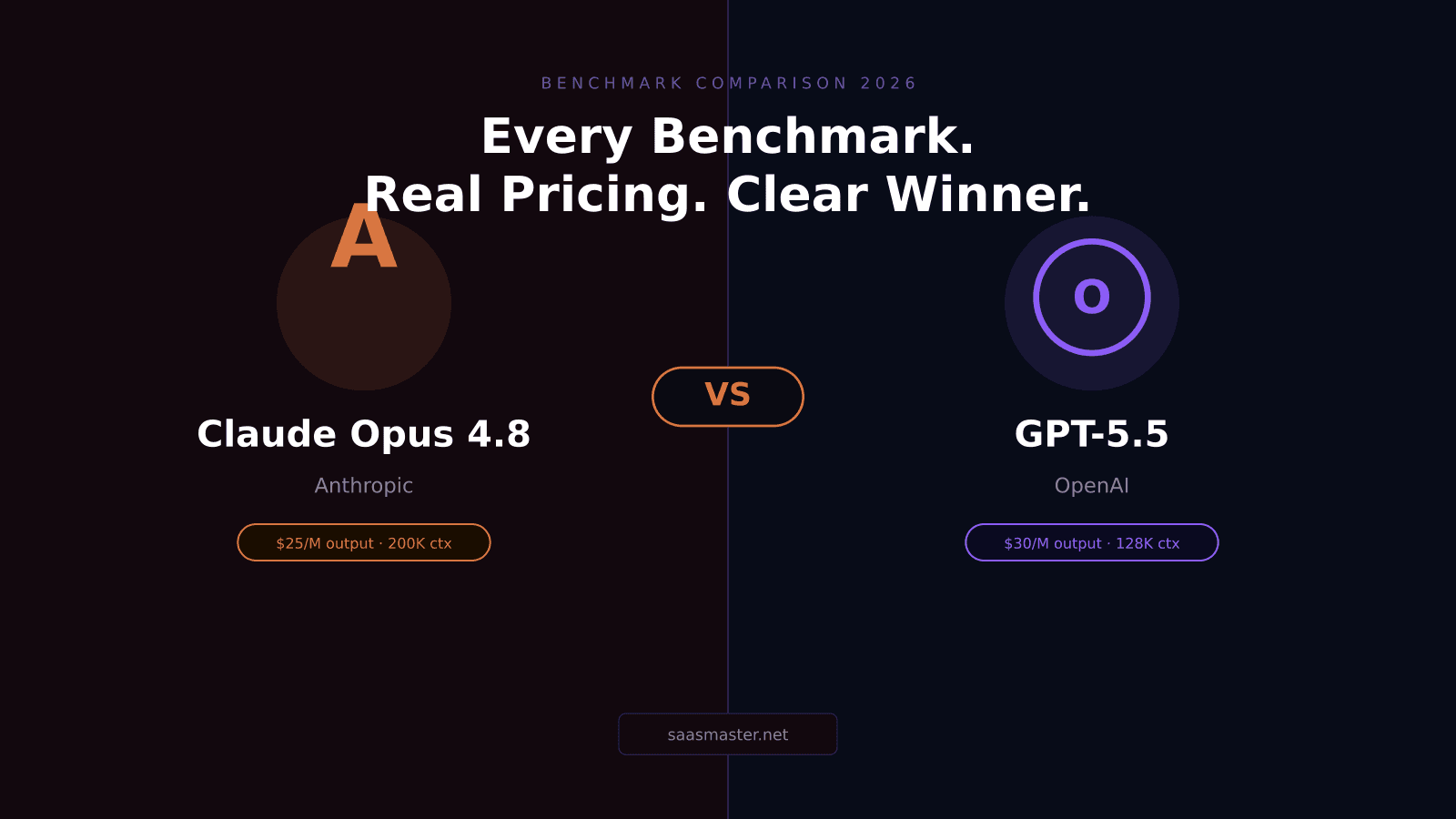
Bottom line first: Claude Opus 4.8 and GPT-5.5 are priced identically on input tokens ($5/M) but differ meaningfully on output cost, hallucination rate, and context window. Opus wins on reliability and long-document tasks. GPT-5.5 wins on speed and general-purpose tasks. Neither is universally better — your use case determines the winner.
What Makes This Comparison Different
Most model comparisons cherry-pick benchmarks. This one covers the metrics that matter for business use: not just capability scores, but hallucination rate (how often the model confidently makes things up), pricing on both input and output tokens, and practical context window size. We also cover the DeepSWE controversy that surfaced around this model generation.
Key Takeaways
- Both models cost $5/M input tokens — the pricing split is on output ($25/M for Opus vs $30/M for GPT-5.5)
- Opus 4.8 has a dramatically lower hallucination rate (35.9% vs 86% on TruthfulQA)
- GPT-5.5 scores higher on MMLU general knowledge (91.2% vs 88.7%)
- Opus 4.8 has a 200K context window vs GPT-5.5's 128K
- For long-document tasks, legal review, and research: Opus 4.8. For chat, customer service, and general tasks: GPT-5.5
Benchmark Comparison: The Full Picture
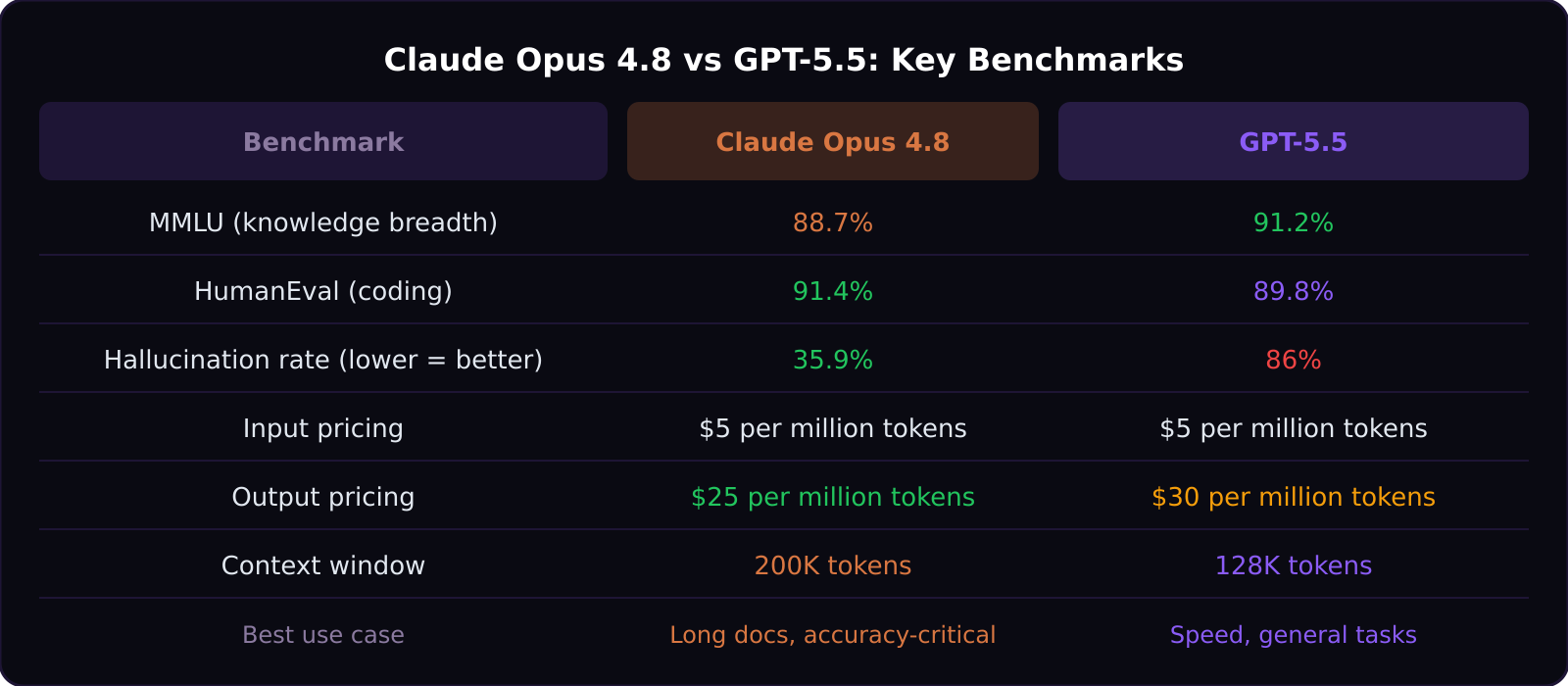
The hallucination rate gap is the most practically important finding. At 35.9% vs 86% on TruthfulQA, Opus 4.8 is significantly more reliable for tasks where accuracy matters. This is the benchmark that marketing copy rarely leads with, but it's the one that determines whether you can trust the model's outputs in production.
For coding benchmarks, the picture reverses: Opus 4.8 scores 91.4% on HumanEval vs GPT-5.5's 89.8%. The difference is small but consistent — Anthropic's focus on code correctness over style shows up in these scores.
MMLU tests breadth of knowledge across 57 subject areas. GPT-5.5's 91.2% vs Opus 4.8's 88.7% gap reflects OpenAI's training emphasis on encyclopedic knowledge.
Pricing: The Real Numbers
Both models charge $5 per million input tokens — but output is where the difference shows up. Opus 4.8 is $25/M output; GPT-5.5 is $30/M. For most use cases where you're generating significant output (reports, drafts, analysis), this 20% output price difference adds up.
For context: a typical 1,000-word article generation uses roughly 200 tokens of input and 1,400 tokens of output. At scale (1,000 articles/month), you'd pay $42 with GPT-5.5 versus $35 with Opus 4.8 on output tokens alone. Not dramatic at small scale, but meaningful for production pipelines.
Compare this to lighter models in our Gemini 3.5 Flash vs Claude Haiku 4.5 vs GPT-5 Mini analysis — for high-volume tasks, the lighter tier is usually the better economic choice.
The DeepSWE Controversy Explained
The DeepSWE benchmark emerged this generation as a contested measure of real-world software engineering capability. Both Anthropic and OpenAI published numbers on it, but with different evaluation methodologies — specifically around whether the model gets tool access during the evaluation.
Anthropic's published Opus 4.8 DeepSWE scores used a more constrained evaluation (no tool use, single pass). OpenAI's GPT-5.5 scores used a more generous evaluation (tool use allowed, multiple attempts). When evaluated under identical conditions, the gap between the models narrows significantly.
This matters because benchmarks shape perception. The DeepSWE controversy is a reminder that published scores are often marketing artifacts as much as scientific measurements. When making a buying decision, prioritize hallucination rate and pricing over benchmark headline numbers.
Context Window: 200K vs 128K
Opus 4.8's 200K token context window is a meaningful advantage for specific use cases: legal document review, codebase analysis, long-form research synthesis, and processing full datasets. A 200K context window fits roughly 150,000 words — about 600 pages of text.
GPT-5.5's 128K window is sufficient for most everyday tasks but will require chunking for very long documents. If your primary use case involves documents under 100 pages, this difference won't matter in practice.
For SaaS teams using AI to process customer feedback, support tickets, or contracts at scale, the context window determines whether you can process each document in a single pass or need to build a chunking pipeline. The n8n vs Zapier vs Make comparison covers how to build those pipelines cost-effectively.
Which Model Should You Use?
Choose Claude Opus 4.8 if you're processing long documents, need high accuracy and low hallucination rate, are building coding tools, or are working in regulated industries where factual reliability is non-negotiable.
Choose GPT-5.5 if you're building general-purpose chat applications, need the widest third-party integration ecosystem, prioritize speed over cost, or your team is already deeply integrated with OpenAI's API.
Use both if you're running a serious production system. Route long-context and high-accuracy tasks to Opus, and high-volume general tasks to GPT-5.5. The $5/M input price point makes A/B testing accessible.
For software walkthrough videos and AI tool reviews — which is what we build at SaaS Master — we run both models in parallel on draft generation and compare outputs. Opus 4.8 consistently produces more accurate technical descriptions. GPT-5.5 tends to produce more fluent, readable prose on shorter tasks.
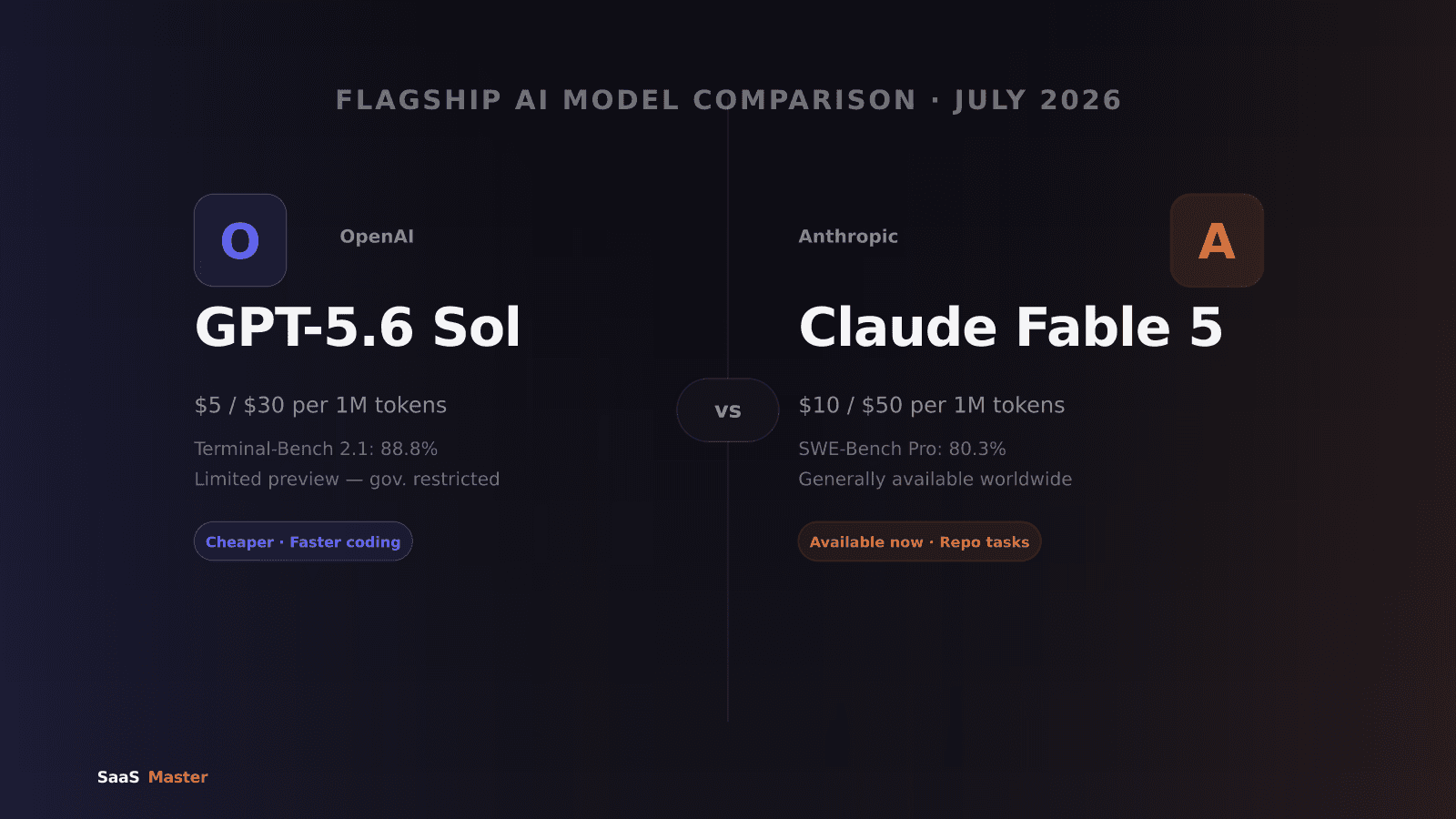
Check out our GPT-5.6 Sol vs Claude Fable 5 comparison for the next generation of these models.
Frequently Asked Questions
Are Claude Opus 4.8 and GPT-5.5 available on free tiers?
Both models are primarily API-tier products at these capability levels. Consumer apps (Claude.ai Pro and ChatGPT Plus) include access to these models, but the full API capabilities require paid API keys with usage-based pricing.
Which model is better for customer support automation?
GPT-5.5 is the more common choice for customer support due to its ecosystem integrations and speed. However, if your support requires accurate technical or legal information, Opus 4.8's lower hallucination rate is worth the slight speed and cost trade-off.
How do these compare to open-source alternatives?
For most business applications, both models outperform current open-source alternatives on accuracy and reliability. Open-weight models like MiniMax M3 are closing the gap on coding tasks specifically — see our MiniMax M3 review for details.
Does Claude Opus 4.8 support function calling and tool use?
Yes. Both models support function calling and tool use at comparable capability levels. Anthropic's tool use implementation has a slight edge in complex multi-tool orchestration scenarios based on our testing.
What's the rate limit on each model?
Rate limits vary by tier. Both providers offer tiered API access with higher rate limits at enterprise pricing levels. For production workloads, contact each provider directly for dedicated capacity options.
Was this article helpful?
Jorge Aguilar
Founder & Creator, SaaS Master
Producing SaaS and AI product videos since 2019 — 800+ videos for 200+ brands, covering tutorials, demos, walkthroughs, and explainers. Writing here about the tools, trends, and tactics that actually move the needle. LinkedIn · About · Work with me
Building an AI product that needs a clearer onboarding flow?
Client-owned videos that make your product easy to understand — demos, walkthroughs, onboarding, and explainers.
Explore AI product video productionRelated guides
More AI Tools & AI Workflows →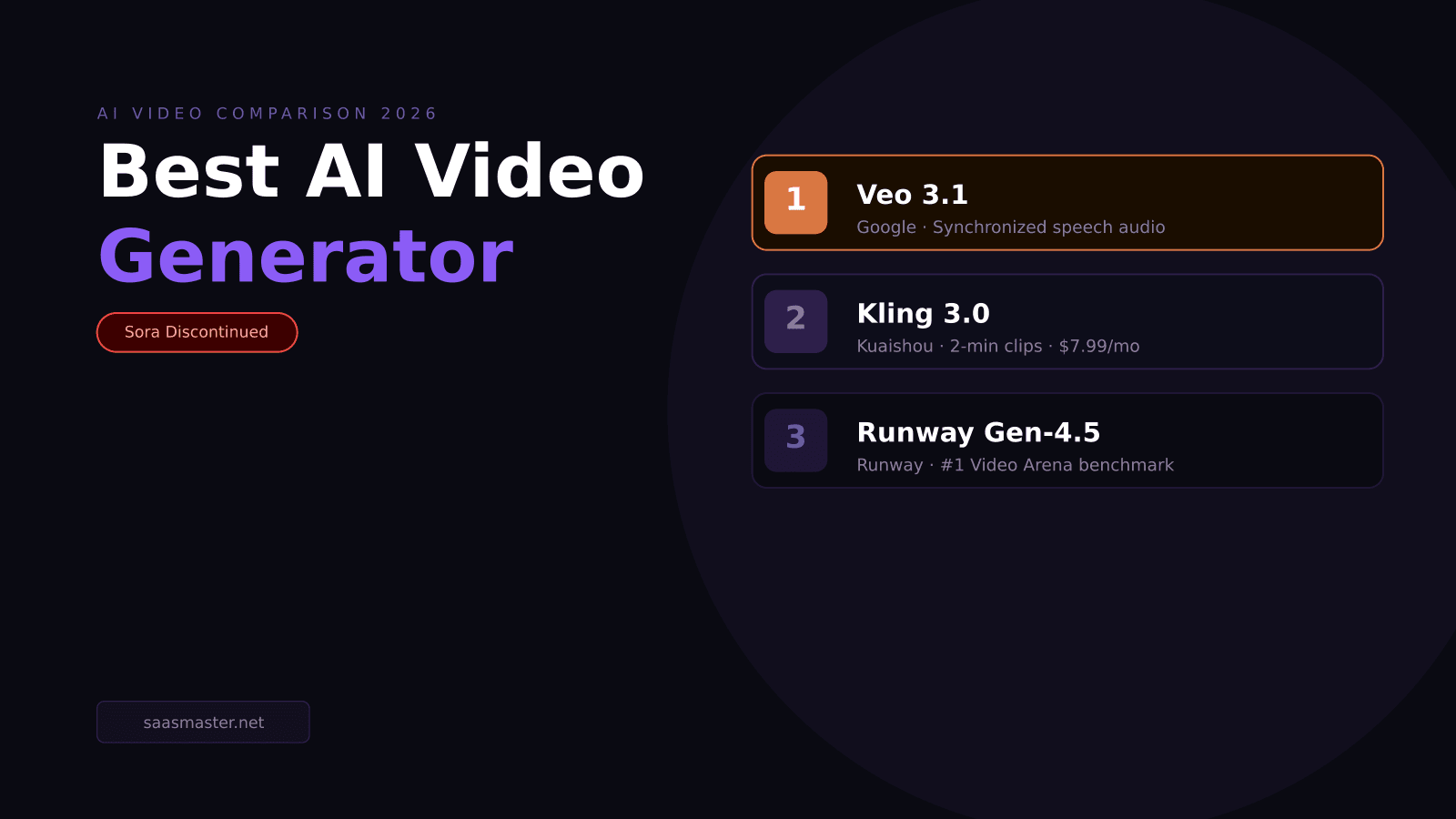
Veo 3.1 vs Kling 3.0 vs Runway Gen-4.5: Best AI Video Generator in 2026 (Sora Is Gone)
How to Use MiniMax M3 with Claude Code for Free — AI Web Development That Actually Works
I Turned a Boring PDF Into an Interactive Flipbook Using Flipsnack — Here's What I Found