You Don't Need Amazon's $1 Billion AI Team: A Practical AI Deployment Playbook for Small SaaS Companies
In short
AWS, OpenAI, and Anthropic are spending billions on AI deployment engineers. Here's the 30/60/90 day playbook small SaaS teams can copy for free.
Amazon just put $1 billion of its own balance sheet into a new team whose entire job is embedding engineers inside customer companies to make AI actually work. OpenAI's version of that same idea is valued at $4 billion. Anthropic's is valued at $1.5 billion. Three of the biggest names in tech just told you, with real money, that the hard part of AI was never the model. It was getting the thing wired into how your company actually operates. You do not have a billion dollars, but the same lesson applies at your scale, and it is more actionable for a five-person SaaS team than it looks.
Key takeaways
- AWS launched a $1 billion Forward Deployed Engineering unit in June 2026, funded entirely from its own balance sheet, to place engineers directly inside customer organizations and accelerate AI rollouts.
- OpenAI's Deployment Company, backed by TPG, Advent, Bain Capital, and Brookfield at a $4 billion valuation, just acquired Northslope, an applied AI firm founded by former Palantir forward-deployed engineers, as its second acquisition.
- Anthropic runs a parallel AI services venture backed by Blackstone, Hellman & Friedman, and Goldman Sachs at a $1.5 billion valuation.
- The pattern across all three: none of them are betting the bottleneck is model quality. They are betting it is implementation, and they are hiring humans to fix that gap.
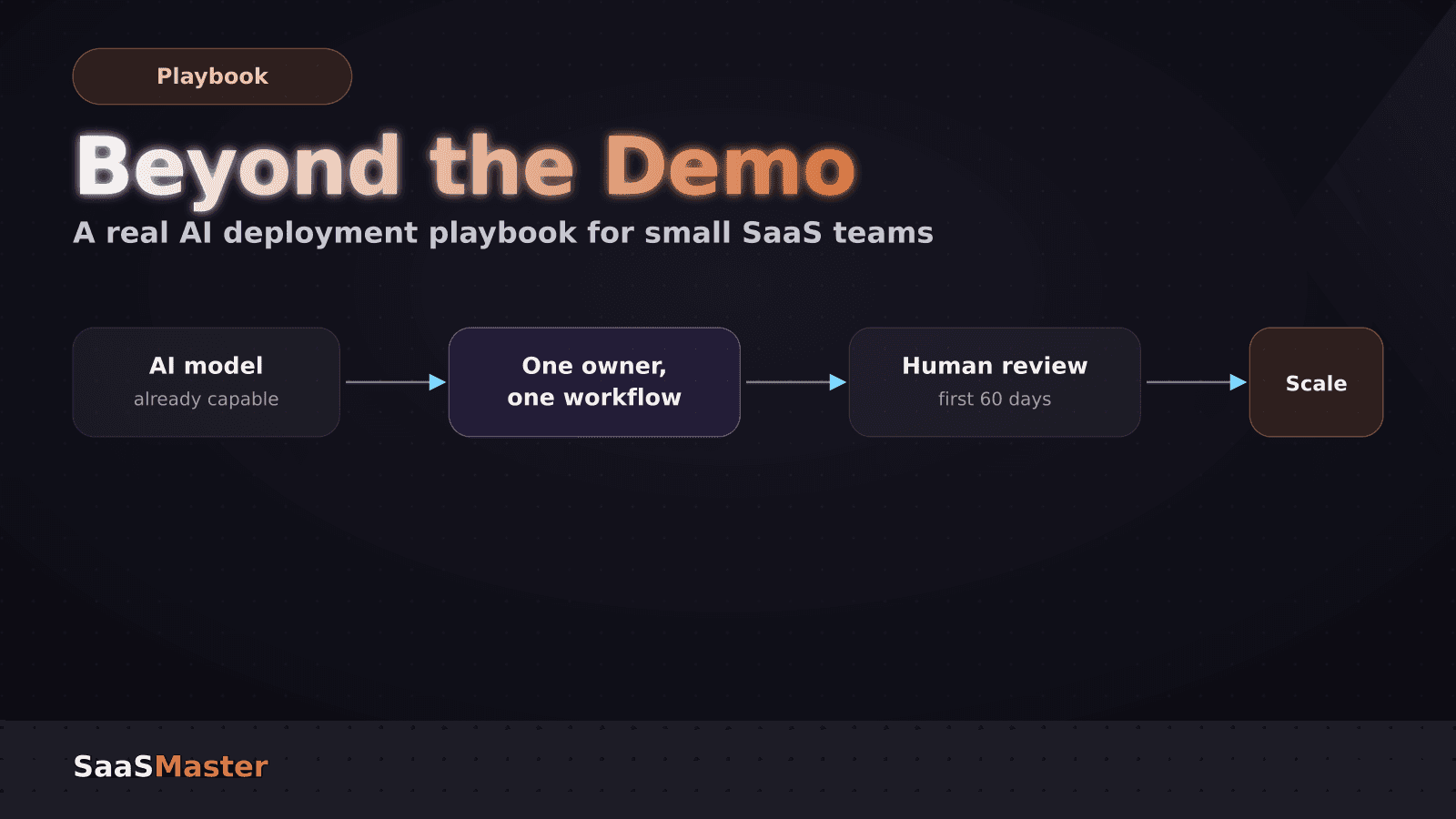
- A small SaaS team can copy the actual mechanism, one person owning AI adoption end to end, without copying the budget, and this piece walks through exactly how.
What is a forward-deployed engineer, and why do three AI giants suddenly want thousands of them?
A forward-deployed engineer is not a support rep and not a sales engineer. It is someone whose job is to sit inside a customer's actual workflow, understand what breaks when AI gets introduced, and rebuild the surrounding process so the AI output actually gets used. The term comes from Palantir, which built an entire company culture around it long before this current wave, and it is exactly why OpenAI's Deployment Company went and bought Northslope, a firm literally founded by ex-Palantir forward-deployed engineers, as its second acquisition since launching.
The reason AWS, OpenAI, and Anthropic are all doing this at once is that they have all hit the same wall from the enterprise side. Model capability improved faster than most companies' ability to absorb it. You can hand a company the best available model and watch it sit unused for months, because nobody inside the building has the authority, time, or process knowledge to wire it into a workflow that survives contact with real customers and real edge cases. AWS's own reasoning for the $1 billion commitment was explicit about this: enterprises are not failing because the models are weak, they are failing because nobody inside the building can make the connection between the model and the work.
Why do most AI deployments inside companies fail?
Almost never because the model was wrong for the job. It is nearly always one of three things: nobody owns the outcome end to end, the AI output gets bolted onto an existing process instead of the process being redesigned around it, or the team declares victory after a demo without ever measuring whether the thing is actually used a month later.
That third failure mode is the quiet killer. A demo that works once in a meeting is not deployment. Deployment is the unglamorous work of watching how a tool gets used in week three, when the novelty is gone and people default back to their old habits unless the new way is genuinely faster.
What can a five-person SaaS team do that a billion-dollar unit does?
You cannot out-hire AWS. But the actual advantage a forward-deployed engineer has over a typical AI rollout is not headcount, it is focus and proximity, and both of those are things a small team already has by default.
Concretely, that means naming one person, even part-time, as the owner of a specific AI workflow, not "AI adoption" broadly. Pick one process, customer support triage, sales follow-up drafting, or QA on generated content, and give that one person explicit authority to change the surrounding process, not just bolt a chatbot onto the existing one. Forward-deployed engineers succeed because they have permission to redesign the workflow itself. Most internal AI pilots fail because the person running them only has permission to add a tool, not to change anything around it.
The second piece worth copying directly is measurement discipline. AWS, OpenAI, and Anthropic are not deploying engineers to run a single demo. They are deploying them to sit with the workflow for weeks and track whether output quality and adoption actually hold up. A small team can do the same thing on a smaller clock: pick one metric that proves the AI tool is actually being used correctly a month in, not just that it was turned on.
How do you actually start, in the next 30, 60, and 90 days?
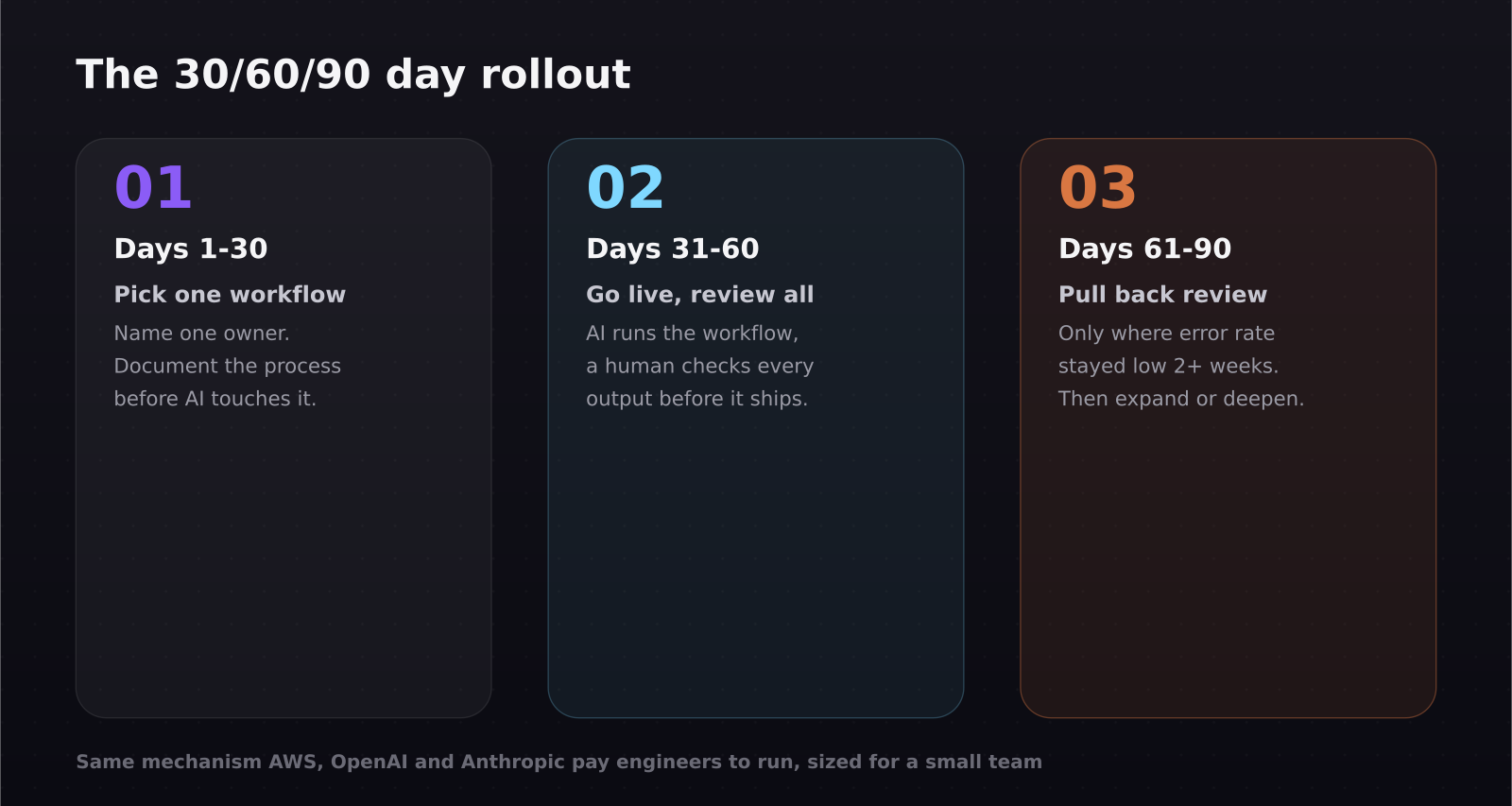
In the first 30 days, pick exactly one workflow and one owner, and resist the urge to roll AI out across three departments at once. Document what the process looks like today, by hand, before any AI touches it, so you have something to compare against later.
In the next 30 days, days 31 to 60, get the AI tool live inside that one workflow, but keep a human reviewing every output for the full window. This is where most teams cut corners, and it is exactly the step forward-deployed engineers refuse to skip, because unreviewed AI output that reaches a real customer once is often enough to kill internal trust in the whole project.
In days 61 to 90, start pulling back human review selectively, only on the parts of the workflow where the error rate has actually stayed low for two straight weeks, and use that freed-up time to either expand to a second workflow or go deeper on quality in the first one. This is also the point where it is worth recording a short internal walkthrough of the new process, partly to onboard the next hire faster, and partly because teams that skip documentation here are the ones re-litigating the same rollout decisions six months later.
Which tasks should you not hand to AI yet?
Anything where a wrong output reaches a customer before a human sees it, and anything where the cost of being wrong is asymmetric, a single bad response to an angry customer costs you more than ten good ones save you. The forward-deployed engineering model exists precisely because enterprises learned this the expensive way: the fastest path to killing internal trust in AI is one visible, embarrassing mistake in front of a real customer. Keep a human in the loop on anything customer-facing until your own 60-to-90-day error-rate data says otherwise, not until you feel confident.
If you want a broader map of which AI tools are actually worth adopting before you get to the deployment stage, our founder's framework for choosing AI tools is a useful starting point, and our roundup of the best AI tools for SaaS teams covers the options by category. If your team is specifically looking at agent-style automation rather than a single tool, our guide to AI agents for small business walks through where agents fit and where they do not yet.
Once a workflow is stable enough to hand off, the fastest way to get a new hire or a client up to speed on it is usually not a written doc, it is a short recorded walkthrough of the actual process, which is exactly the kind of asset our software walkthrough videos work covers for teams that would rather show the process once on video than re-explain it to every new person who joins.
For more on how AI is actually getting adopted inside SaaS companies right now, browse our AI tools and workflows hub.
Frequently asked questions
Do I need to hire a dedicated AI engineer to do this?
No. The forward-deployed engineer model works because of focus and ownership, not because of specialized headcount. A generalist team member with explicit authority to redesign one workflow around an AI tool, and the time to watch how it performs for 90 days, can replicate the core mechanism without a new hire.
How is this different from just buying an AI tool and turning it on?
Turning a tool on gets you a demo. Deployment is the process of watching how that tool performs in real use for weeks, keeping a human reviewing output until the error rate proves itself, and being willing to redesign the surrounding workflow rather than just adding the tool on top of the old one unchanged.
What is the single biggest reason AI rollouts fail inside small companies?
Nobody is explicitly responsible for the outcome past the initial setup. Naming one owner for one specific workflow, with real authority to change the process around it, fixes more failed AI rollouts than switching to a better model ever does.
Was this article helpful?
Jorge Aguilar
Founder & Creator, SaaS Master
Producing SaaS and AI product videos since 2019 — 800+ videos for 200+ brands, covering tutorials, demos, walkthroughs, and explainers. Writing here about the tools, trends, and tactics that actually move the needle. LinkedIn · About · Work with me
Building an AI product that needs a clearer onboarding flow?
Client-owned videos that make your product easy to understand — demos, walkthroughs, onboarding, and explainers.
Explore AI product video productionRelated guides
More AI Tools & AI Workflows →
Claude Sonnet 5 vs GPT-5.6 Terra: The Mid-Tier AI Showdown With a Deadline
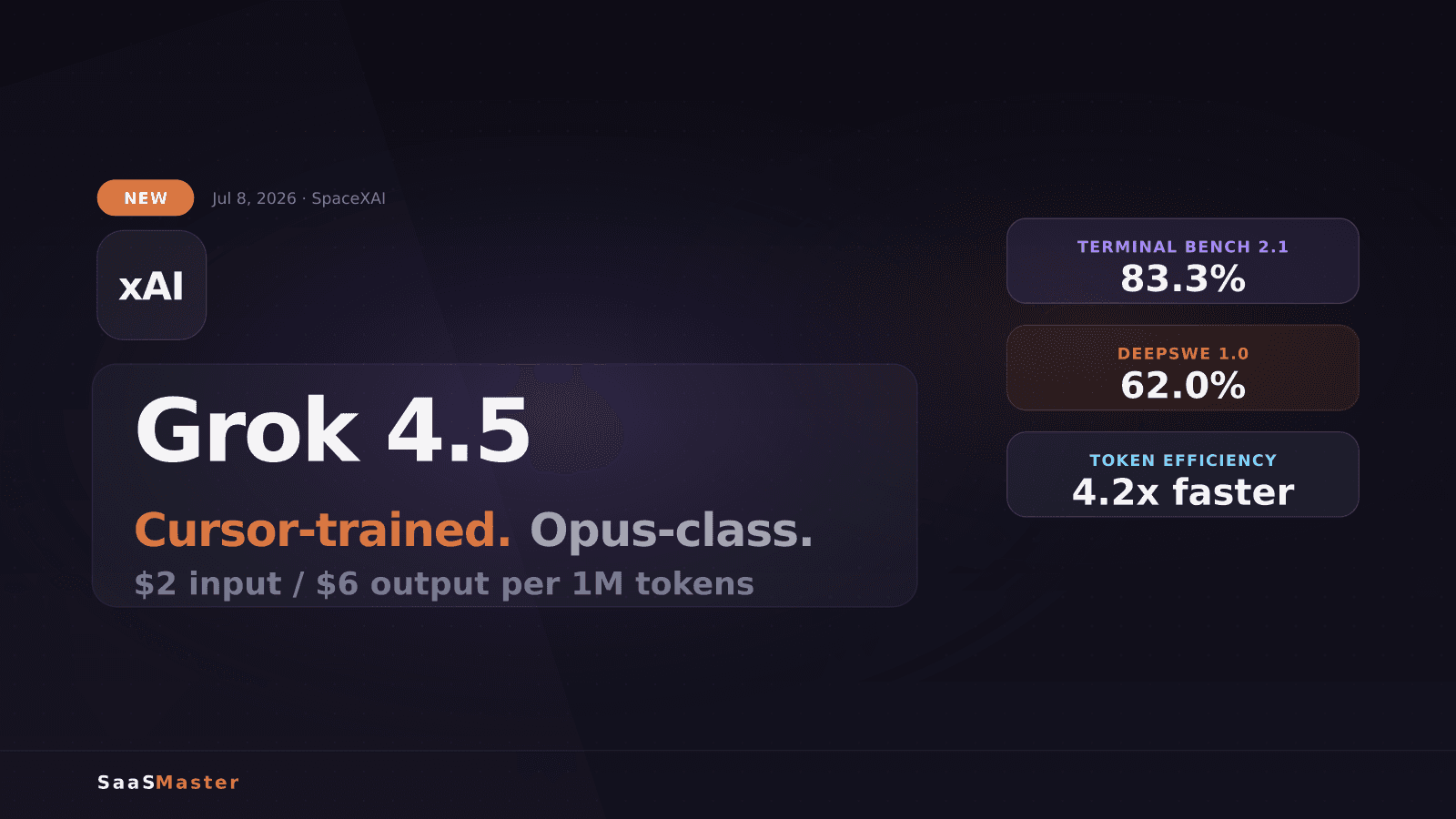
Grok 4.5: SpaceXAI's Cursor-Trained Coding Model Lands at $2/$6 Per Million Tokens
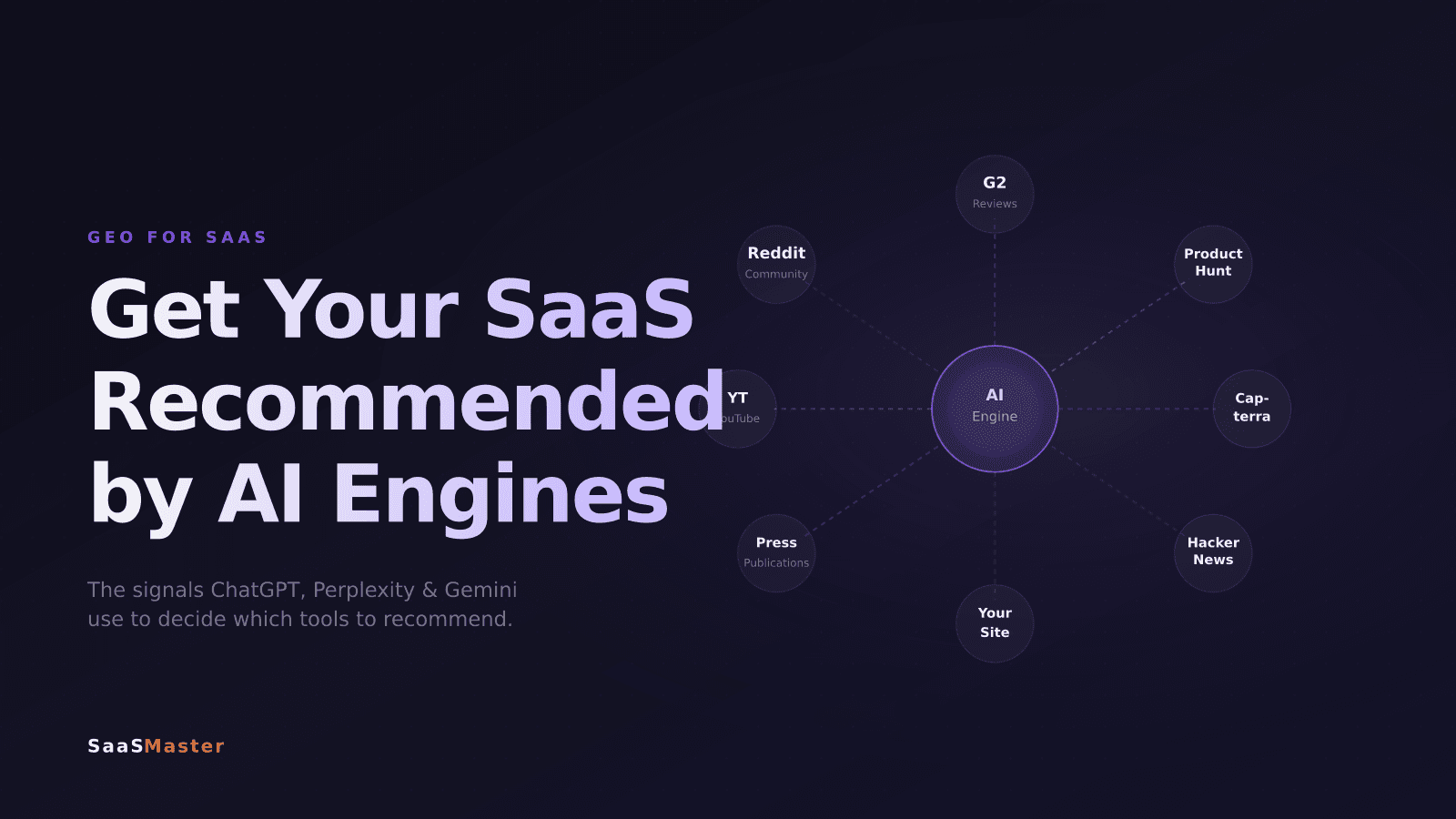
How to Get Your SaaS Tool Recommended by AI Engines